27 October 2026
Facial Volume Loss After GLP-1 Weight Loss: What Are the Treatment Considerations?
As GLP-1 receptor agonists become increasingly established in medical weight management, changes in facial appearance following substantial weight loss are receiving growing attention in aesthetic medicine.
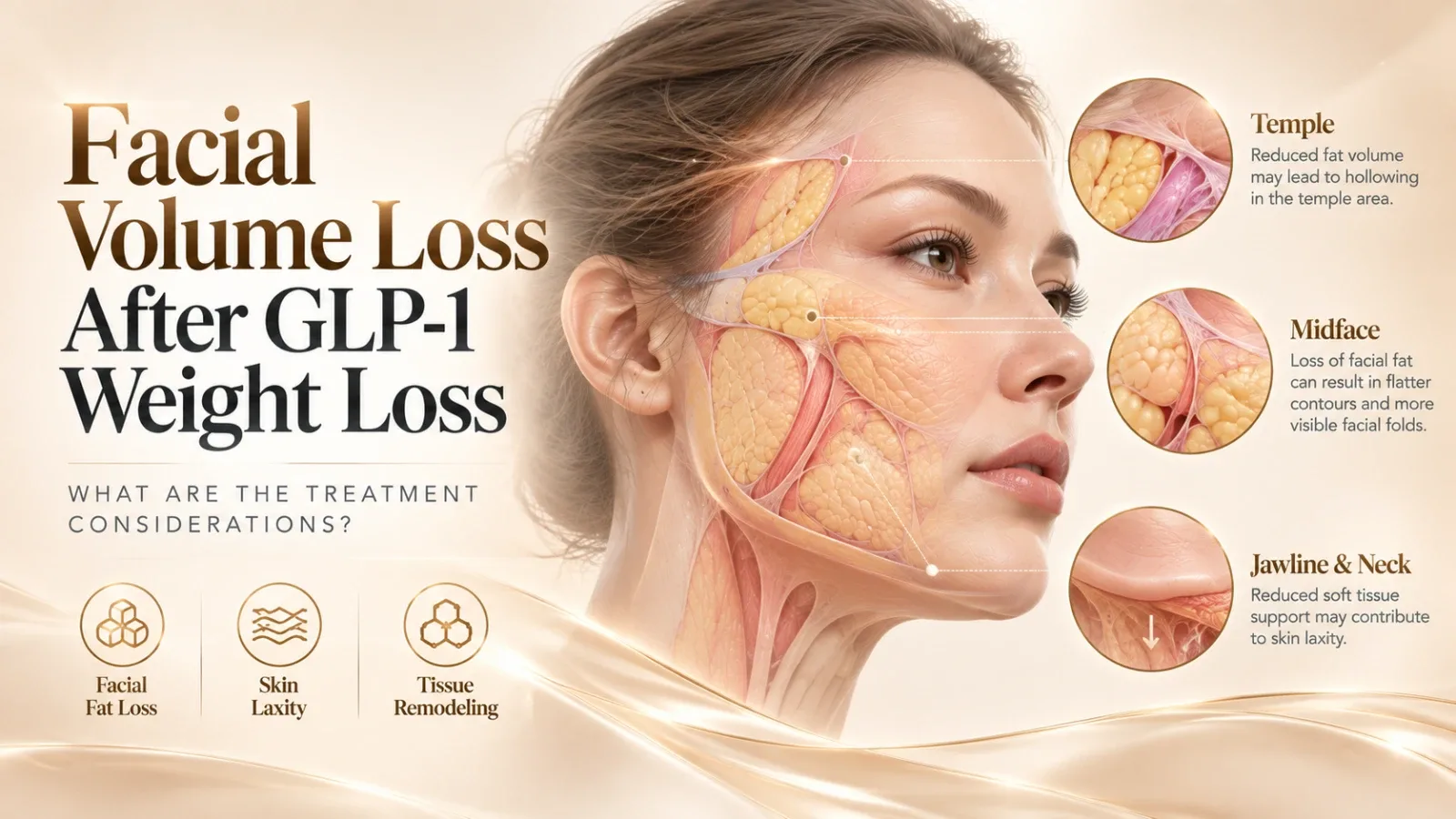
Some patients notice increased temple hollowing, reduced cheek fullness, more prominent facial folds, or greater skin laxity after losing weight. These changes are often described on social media as “Ozempic Face.”
However, this term does not represent a distinct medical diagnosis, nor does it establish that GLP-1 medications directly cause facial aging. Current evidence suggests that many of these changes are associated with substantial weight loss and the increased visibility of pre-existing age-related changes. Similar patterns may occur following dietary weight loss or bariatric surgery.
The clinical challenge is therefore not simply to replace lost volume, but to understand how fat compartments, structural support, and skin quality change during weight reduction.
01 | Why Does Weight Loss Change Facial Appearance?
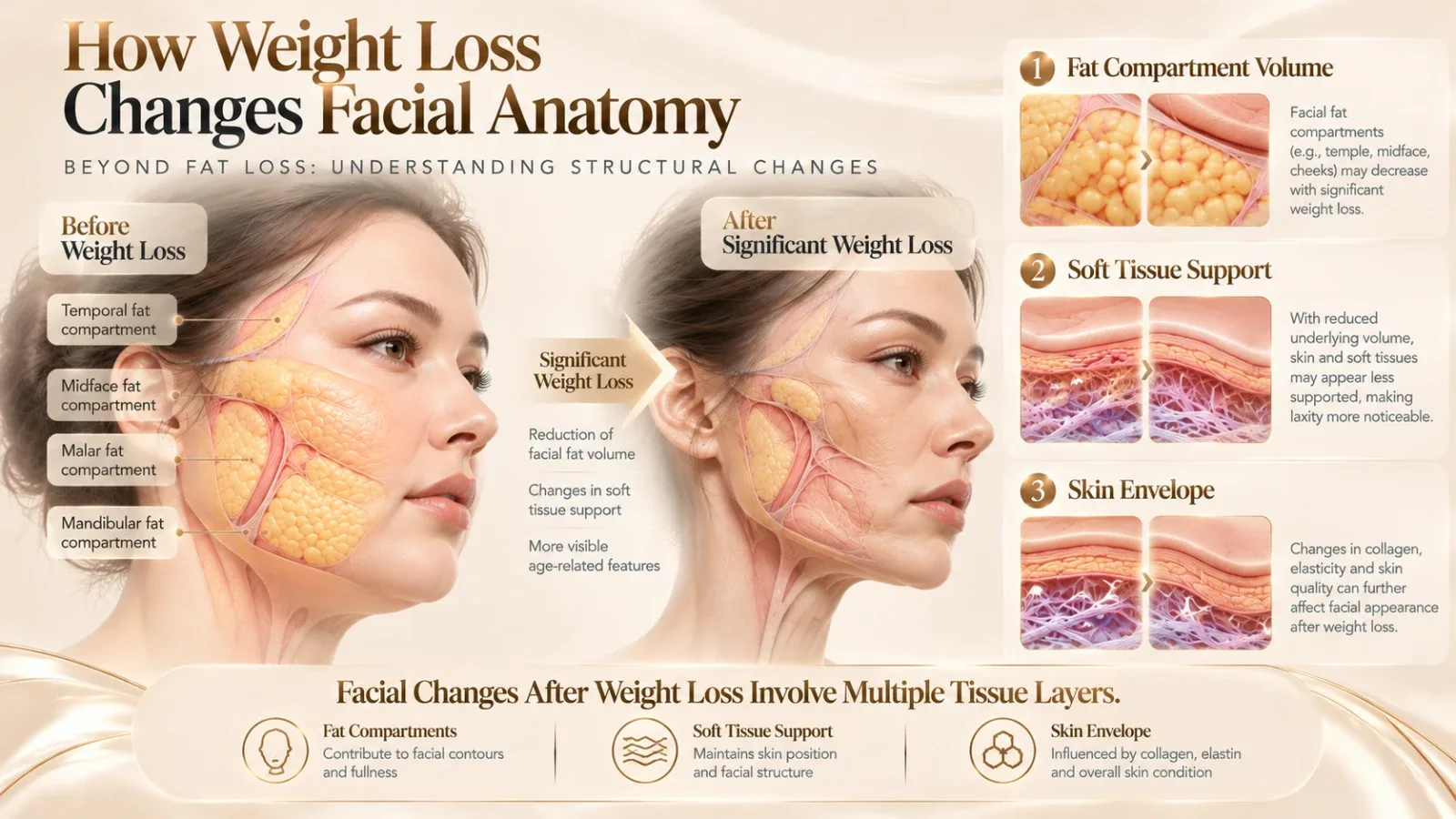
Facial appearance depends on the interaction of multiple anatomical structures, including fat compartments, collagen-rich connective tissue, retaining ligaments, and skeletal support.
Facial fat is distributed across different anatomical layers and regions, contributing to the contours of the cheeks, temples, periorbital area, and jawline.
During substantial weight loss, reductions in facial fat volume can make contour transitions more visible, creating the appearance of hollowing or flattening.
A 2024 systematic review published in Aesthetic Surgery Journal Open Forum identified midfacial volume reduction and increased facial and neck skin laxity among the characteristic soft-tissue changes observed after major weight loss.
These findings highlight an important distinction: post-weight-loss facial changes involve multiple tissue layers rather than a single loss of subcutaneous volume.
02 | Volume Loss, Skin Laxity, and Skin Quality: Three Different Problems
Although these changes frequently occur together, they represent different anatomical and aesthetic concerns.
Volume Loss
Reduced fat volume in the temples, cheeks, and other facial regions may create hollowing, flatter contours, or more pronounced facial transitions.
The primary concern is a change in soft-tissue volume.
Skin Laxity
As underlying volume decreases, the overlying skin may appear less supported. Age-related changes in collagen, elasticity, and tissue position can further influence this appearance.
However, skin laxity is not equivalent to volume deficiency. Adding more filler may not adequately address significant tissue descent or redundant skin.
Skin Quality Changes
Some patients also notice changes in skin texture, fine lines, or elasticity. These features can be influenced by age, baseline skin condition, nutritional status, and other factors.
This leads to a fundamental assessment question:
Is the primary concern volume depletion, skin quality, tissue laxity, or a combination of these changes?
03 | HA, PLLA, and CaHA: Different Materials, Different Roles
The development of regenerative aesthetics has expanded facial rejuvenation beyond conventional volume replacement toward approaches that also consider tissue quality and collagen remodeling.
However, different injectable materials have distinct mechanisms and limitations.
HA: Targeted Volume Restoration
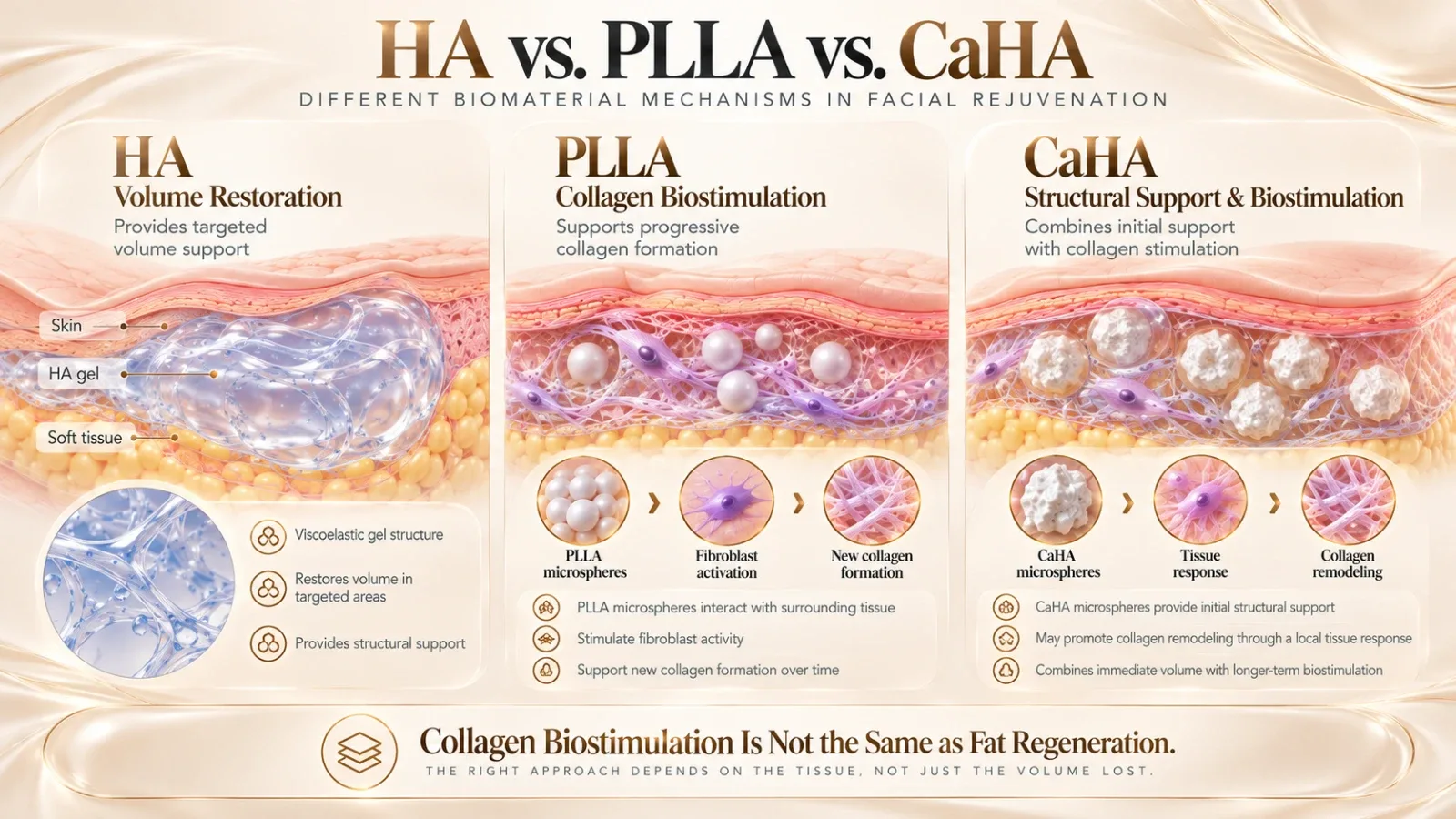
Hyaluronic acid (HA) fillers can provide volume and structural support through their physical presence and rheological properties.
They may be considered when the primary concern is localized volume deficiency, following appropriate anatomical assessment.
However, HA fillers do not reproduce every function of native facial fat, and excessive volume augmentation may create unnatural contour changes.
PLLA: Progressive Collagen Biostimulation
Poly-L-lactic acid (PLLA) is a biodegradable collagen-stimulating biomaterial.
Rather than relying primarily on immediate gel volume, PLLA microspheres interact with surrounding tissue and initiate a local biological response that can support fibroblast activity and new collagen formation.
Over time, collagen deposition may contribute to tissue remodeling and progressive changes in volume and contour.
An important distinction must be maintained:
PLLA-induced collagen formation is not equivalent to directly regenerating lost facial fat.
For patients with substantial fat-compartment depletion, collagen biostimulation and direct volume restoration should not be viewed as completely interchangeable approaches.
CaHA: Structural Support and Collagen Stimulation
Calcium hydroxylapatite (CaHA) is another injectable biomaterial used in aesthetic medicine.
Depending on the formulation and technique, CaHA-based products may provide initial structural support while supporting subsequent collagen remodeling through local tissue interactions.
Its suitability depends on the anatomical region, tissue characteristics, product properties, and treatment objectives.
From a biomaterial perspective, HA, PLLA, and CaHA should therefore be understood as distinct material platforms rather than universal substitutes for one another.
04 | Why Does Post-Weight-Loss Facial Rejuvenation Require a Conservative Approach?
During active weight loss, facial soft-tissue volume may continue to change.
Extensive volume augmentation before weight stabilization can make long-term contour planning more difficult, particularly if further facial fat loss occurs.
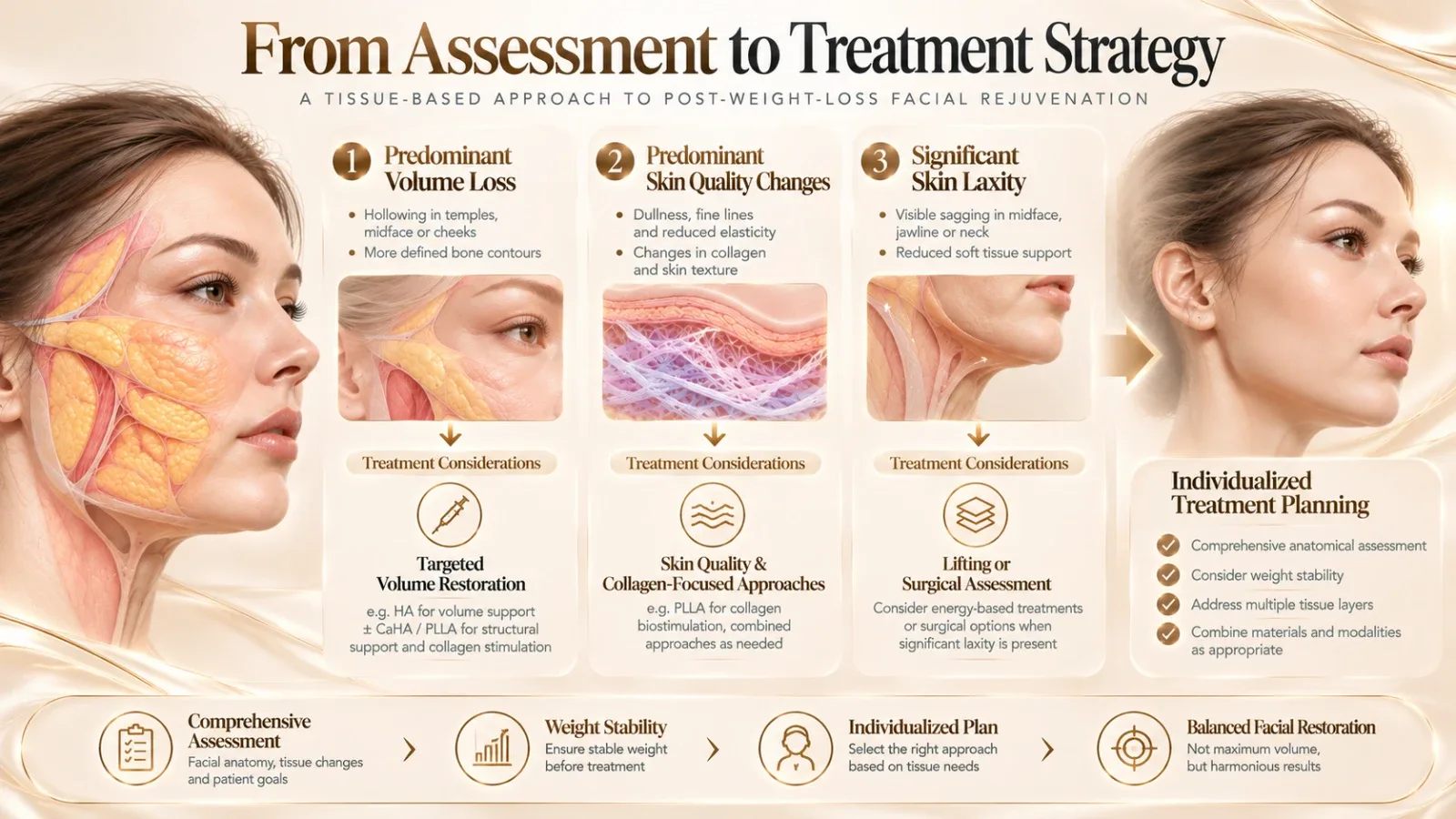
Assessment should therefore consider weight trajectory, facial anatomy, skin elasticity, existing age-related changes, and individual aesthetic goals.
For localized volume deficiency, targeted restoration may be considered. Where skin quality is the primary concern, tissue-focused approaches may be more appropriate. Significant laxity or redundant skin may require evaluation of lifting procedures or surgical options.
The goal is not to select one injectable material for every patient, but to match the intervention to the dominant anatomical concern.
05 | From Volume Restoration to Regenerative Biomaterial Design
The growing interest in facial changes following medical weight loss also highlights the relevance of biomaterial engineering and collagen biostimulation.
Soul Youth REVIVE combines PLLA, HA, and trehalose in a multi-component formulation designed around complementary material functions.
PLLA serves as the principal collagen biostimulator, HA contributes hydration-related and volume-supporting properties, and trehalose plays a role in formulation stability.
This formulation strategy reflects a broader direction in regenerative aesthetics: moving beyond single-function fillers toward biomaterials designed with multiple tissue-related considerations.
However, product-specific clinical performance must be evaluated using appropriate evidence, regulatory indications, and validated treatment protocols. Ingredient composition alone does not establish efficacy for facial changes associated with GLP-1-related weight loss.
As regenerative aesthetics continues to evolve, the opportunity lies in better understanding when volume restoration, collagen stimulation, and structural support may be appropriate.
Conclusion
Facial changes following GLP-1-associated weight loss present a complex tissue-management challenge.
When facial fat compartments lose volume, skin support changes, and existing signs of aging become more visible, effective aesthetic planning requires an understanding of the underlying anatomy rather than an emphasis on replacing as much volume as possible.
Regenerative aesthetics is not simply about restoring lost volume. It is about understanding what the tissue actually needs.
1. Soft Tissue Facial Changes Following Massive Weight Loss Secondary to Medical and Surgical Bariatric Interventions: A Systematic Review.
Aesthetic Surgery Journal Open Forum, 2024.
2. GLP-1-Induced Weight Loss and the Face: Anatomical Mechanisms and Rationale for Collagen-Stimulating and Volumizing Aesthetic Treatments.
Dermatologic Surgery, 2026.
DOI: 10.1097/DSS.0000000000005180
3. Glucagon-Like Peptide-1 Receptor Agonist-Associated Facial Changes: A Comprehensive Review of Pathophysiology, Clinical Manifestations, Risk Factors, Prevention, and Management.
Aesthetic Surgery Journal, 2026.
DOI: 10.1093/asj/sjag230
4. Face and Neck Lifting After Weight Loss.
Clinics in Plastic Surgery, 2019.
DOI: 10.1016/j.cps.2018.08.012
Specifications, terms and registration status.
Our team supports licensed clinics, distributors and OEM partners — tell us what your market needs.