20 October 2026
Facial Widening and Tissue Aging: Why Structural Support Matters Beyond Volume
Understanding the relationship between extracellular matrix remodeling, facial contour changes, and collagen biostimulation Beyond Volume: Rethinking Facial Widening
Aging is often associated with wrinkles, volume loss, and skin laxity. Yet another visible change frequently discussed in aesthetic medicine is the gradual widening or heaviness of the lower face, accompanied by reduced jawline definition.
Although these changes may appear to be related to excess facial volume, the underlying biology is considerably more complex.
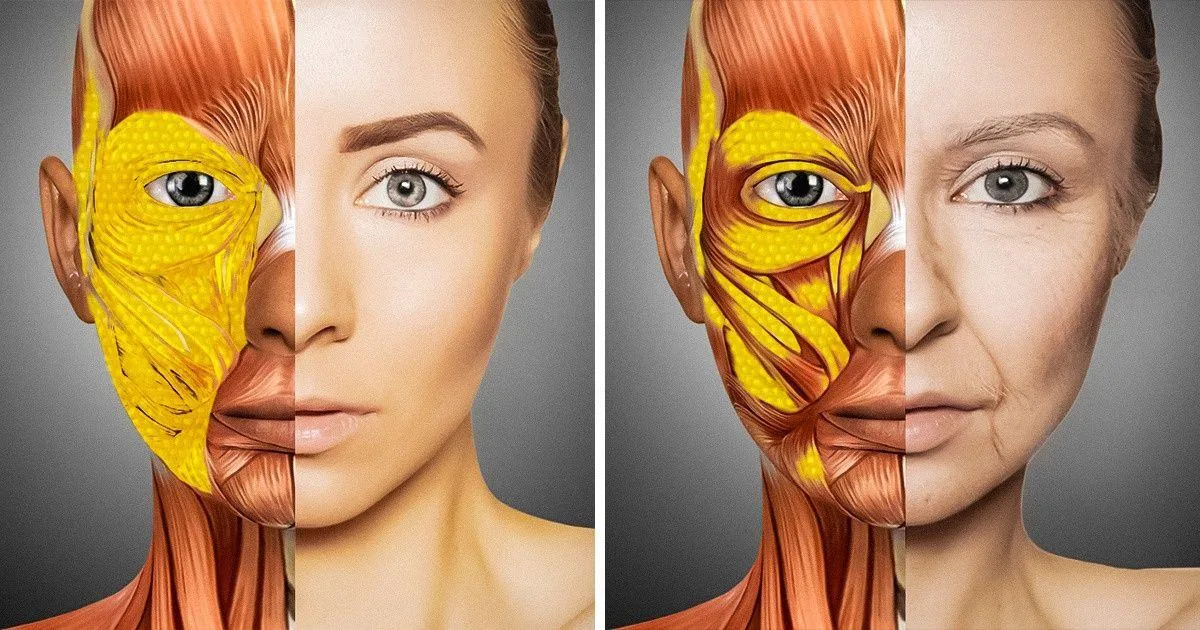
Facial aging is a multidimensional process involving the skin, extracellular matrix (ECM), subcutaneous fat compartments, retaining ligaments, muscles, and underlying skeletal structures.
As these tissues change over time, their relationships with one another also evolve. The result may be a redistribution of facial contours rather than a simple increase in tissue volume.
Understanding these structural changes is essential for developing more comprehensive approaches to facial rejuvenation.
1. The Extracellular Matrix: A Foundation of Tissue Integrity
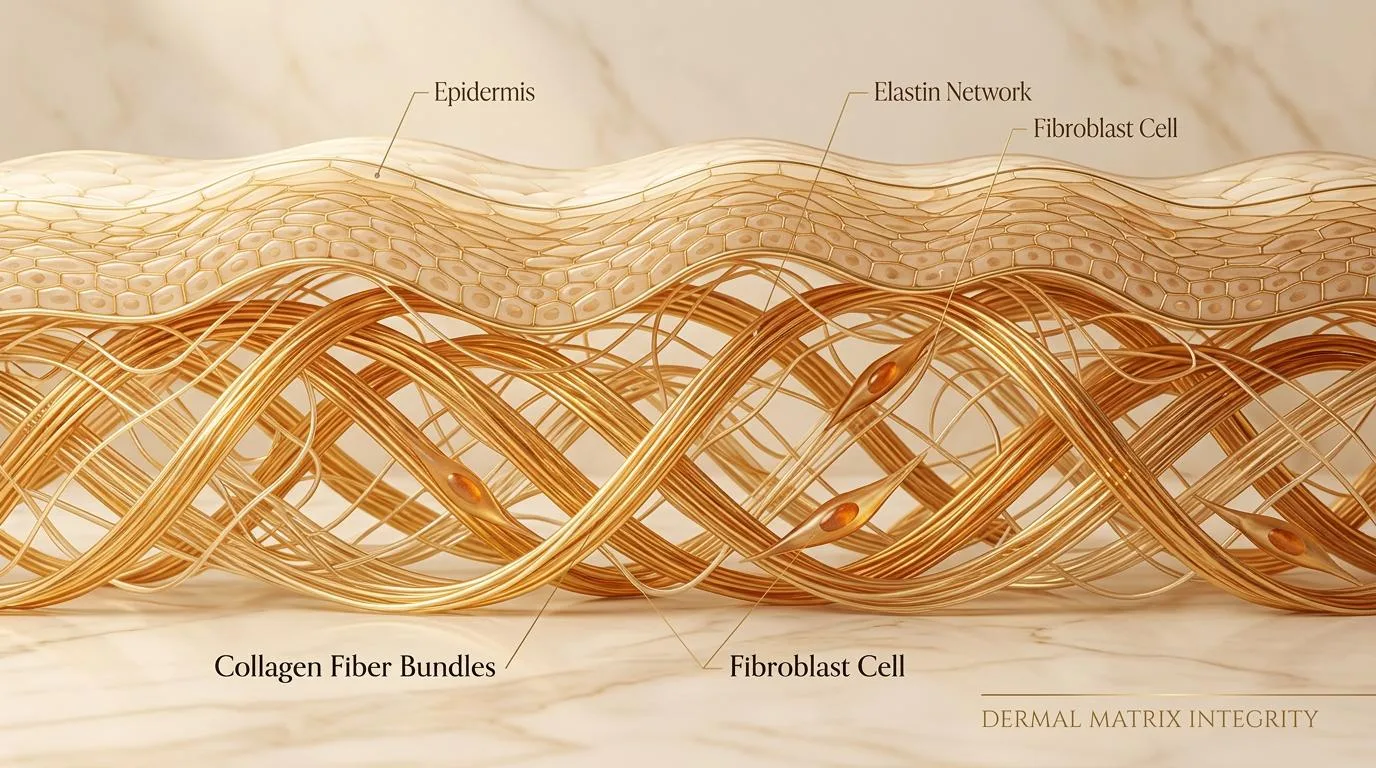
The extracellular matrix is a dynamic biological network surrounding cells within connective tissues.
It contains several important structural components, including:
Collagen: Contributes tensile strength and mechanical support.
Elastin: Helps tissues recover their shape after stretching.
Hyaluronic acid and other glycosaminoglycans: Contribute to hydration and the extracellular environment.
Proteoglycans and structural proteins: Participate in cellular interactions and tissue organization.
Together, these components create a framework that supports tissue architecture and influences how cells respond to their surrounding environment.
However, the ECM is not a static structure.
Throughout life, it undergoes continuous synthesis, degradation, and remodeling. With aging, this balance gradually changes.
2. What Happens to the ECM During Aging?
Several biological processes contribute to age-related ECM alterations.
Reduced Collagen Production
Fibroblasts are responsible for producing many of the structural proteins found in connective tissue.
As the skin ages, fibroblast function and collagen synthesis may decline, contributing to reduced dermal support.
Increased Matrix Degradation
Environmental exposure, oxidative stress, and age-related biological changes can influence enzymes involved in extracellular matrix degradation.
This may contribute to the progressive fragmentation and disorganization of collagen fibers.
Changes in Tissue Elasticity
Alterations in collagen architecture and the elastic fiber network can affect the ability of tissues to maintain and recover their shape.
Over time, these changes may contribute to reduced firmness and increased tissue laxity.
Altered Cellular Microenvironment
The ECM also participates in biochemical signaling and cellular communication.
Changes in matrix composition and mechanical properties can influence fibroblast behavior and tissue remodeling.
The significance of ECM aging therefore extends beyond the appearance of the skin. It also affects the biological environment that helps maintain tissue integrity.
3. How Structural Aging Influences Facial Contours
The appearance of a wider or heavier lower face cannot be explained by ECM deterioration alone.
Facial aging involves several interacting mechanisms:
Soft-Tissue Descent
Changes in connective tissue support and retaining structures may contribute to the downward displacement of facial soft tissues.
Fat Compartment Redistribution
Age-related changes in superficial and deep facial fat compartments can alter facial proportions and contour definition.
Skeletal Remodeling
Changes in underlying bone structure may influence the mechanical support available to overlying facial tissues.
Skin and Connective Tissue Laxity
Reduced skin elasticity and connective tissue support can contribute to changes in jawline definition.
Together, these processes may produce an appearance of increased lower-face width, even when overall facial volume has not increased.
It is equally important to recognize that facial width is influenced by individual anatomy, muscle development, adiposity, and other factors.
Facial widening is therefore best understood as a descriptive aesthetic observation rather than a single biological diagnosis.
This perspective suggests that facial rejuvenation should begin with understanding the specific anatomical contributors to each patient's appearance.
4. From Volume Replacement to Collagen Biostimulation
Traditional aesthetic approaches often focus on restoring lost volume or modifying visible contours.
While volume replacement remains an important component of aesthetic treatment, growing attention is being directed toward tissue quality, biological remodeling, and structural support.
This is where collagen biostimulatory materials have become an important area of interest.
Rather than relying exclusively on immediate physical augmentation, biostimulatory strategies aim to encourage a gradual tissue response that may contribute to collagen formation and remodeling.
The distinction is important:
Volume replacement addresses tissue shape and volume directly.
Collagen biostimulation focuses on stimulating biological processes associated with new matrix formation.
These approaches are not necessarily alternatives. Depending on the patient's anatomy and clinical needs, they may play complementary roles.
5. PLLA: A Biomaterial for Progressive Collagen Remodeling
Poly-L-lactic acid (PLLA) is a biodegradable synthetic polymer that has been studied and used in aesthetic medicine as a collagen biostimulatory material.
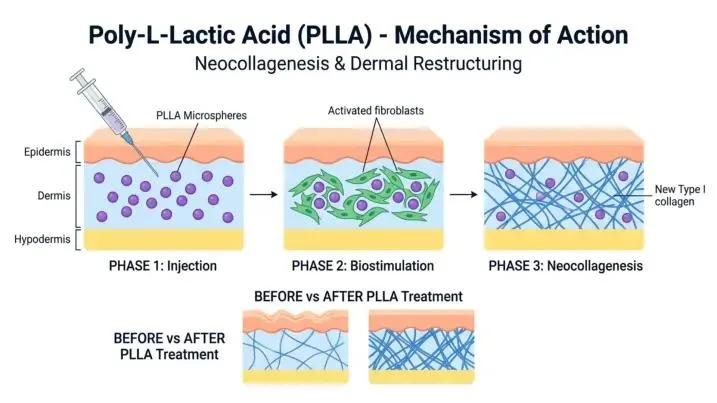
Following administration in appropriate clinical settings, PLLA particles interact with surrounding tissues and initiate a local biological response.
This process may promote fibroblast-associated collagen production and progressive extracellular matrix remodeling.
Research on PLLA tissue responses has described collagen deposition involving Type I and Type III collagen, although the extent and timing of these changes depend on the formulation, treatment technique, tissue environment, and other factors.
The biological sequence may be summarized conceptually as:
PLLA Microspheres
↓
Local Tissue Response
↓
Fibroblast-Associated Activity
↓
New Collagen Formation
↓
Progressive ECM Remodeling
Unlike materials whose primary aesthetic effect comes from immediate physical volume replacement, PLLA-based biostimulation develops progressively through tissue responses over time.
However, collagen stimulation should not be interpreted as a guarantee of facial lifting, correction of lower-face widening, or reversal of all aging-related anatomical changes.
Clinical outcomes depend on product characteristics, patient selection, injection technique, and the structural causes being addressed.
6. Soul Youth REVIVE: A Biomaterial-Oriented Approach
At Soul Youth, we believe that the next generation of regenerative aesthetics should be informed by a deeper understanding of tissue biology.
Soul Youth REVIVE is developed around PLLA microsphere technology, reflecting our interest in collagen biostimulation, biomaterial engineering, and the relationship between material design and tissue response.
From a formulation perspective, microsphere characteristics, particle distribution, material properties, and interactions with the surrounding tissue environment are important considerations in the development of PLLA-based technologies.
Our approach emphasizes the scientific principles underlying gradual collagen remodeling rather than viewing aesthetic improvement solely through the lens of immediate volume enhancement.
Importantly, the established scientific literature on PLLA provides a framework for understanding the material category. Product-specific clinical efficacy and safety must be evaluated using evidence relevant to the final formulation and its intended use.
7. The Future of Facial Rejuvenation Is Structural and Biological
Facial aging is not simply a process of losing volume.
It represents a series of interconnected changes involving tissue architecture, matrix composition, fat distribution, connective tissue support, and skeletal anatomy.
As regenerative aesthetics evolves, the focus is expanding from correcting visible changes to understanding the biological mechanisms that contribute to them.
Extracellular matrix remodeling and collagen biostimulation offer valuable perspectives within this broader field.
The future of aesthetic medicine is not only about replacing what has been lost. It is also about understanding the biological environment that supports tissue structure over time.
At Soul Youth, this philosophy continues to guide our exploration of regenerative biomaterials and science-driven aesthetic innovation.
About Soul Youth
Soul Youth is a Singapore-based regenerative aesthetics brand focused on biomaterial innovation and the development of aesthetic technologies inspired by tissue biology, collagen remodeling, and regenerative science.
Scientific note: This article is intended for professional education and scientific discussion. It does not establish the safety, efficacy, regulatory approval, or clinical indications of any specific Soul Youth product. Product use is subject to applicable regulatory requirements and supporting clinical evidence.
Specifications, terms and registration status.
Our team supports licensed clinics, distributors and OEM partners — tell us what your market needs.