Skip to content
News & Insights

28 August 2026

How Does Collagen Stimulation Work?

In regenerative aesthetics, “collagen stimulation” is a term we hear frequently. But collagen stimulation does not mean directly “filling” the skin with collagen. Instead, it refers to the use of specific materials that interact with tissue to initiate biological responses associated with repair and remodeling, ultimately supporting the formation of new collagen. Understanding this process is an important foundation for understanding collagen biostimulators.

Collagen stimulation is not the same as filling.  In regenerative aesthetics, the key question is no longer only:  “What does the material provide?”  It is also:  “How does the tissue respond?”  Biostimulatory materials can interact with tissue, support fibroblast activity, and contribute to gradual collagen formation and extracellular matrix remodeling over time.  This is why collagen biostimulators follow a very different biological logic from conventional fillers.

Why Does Collagen Matter?

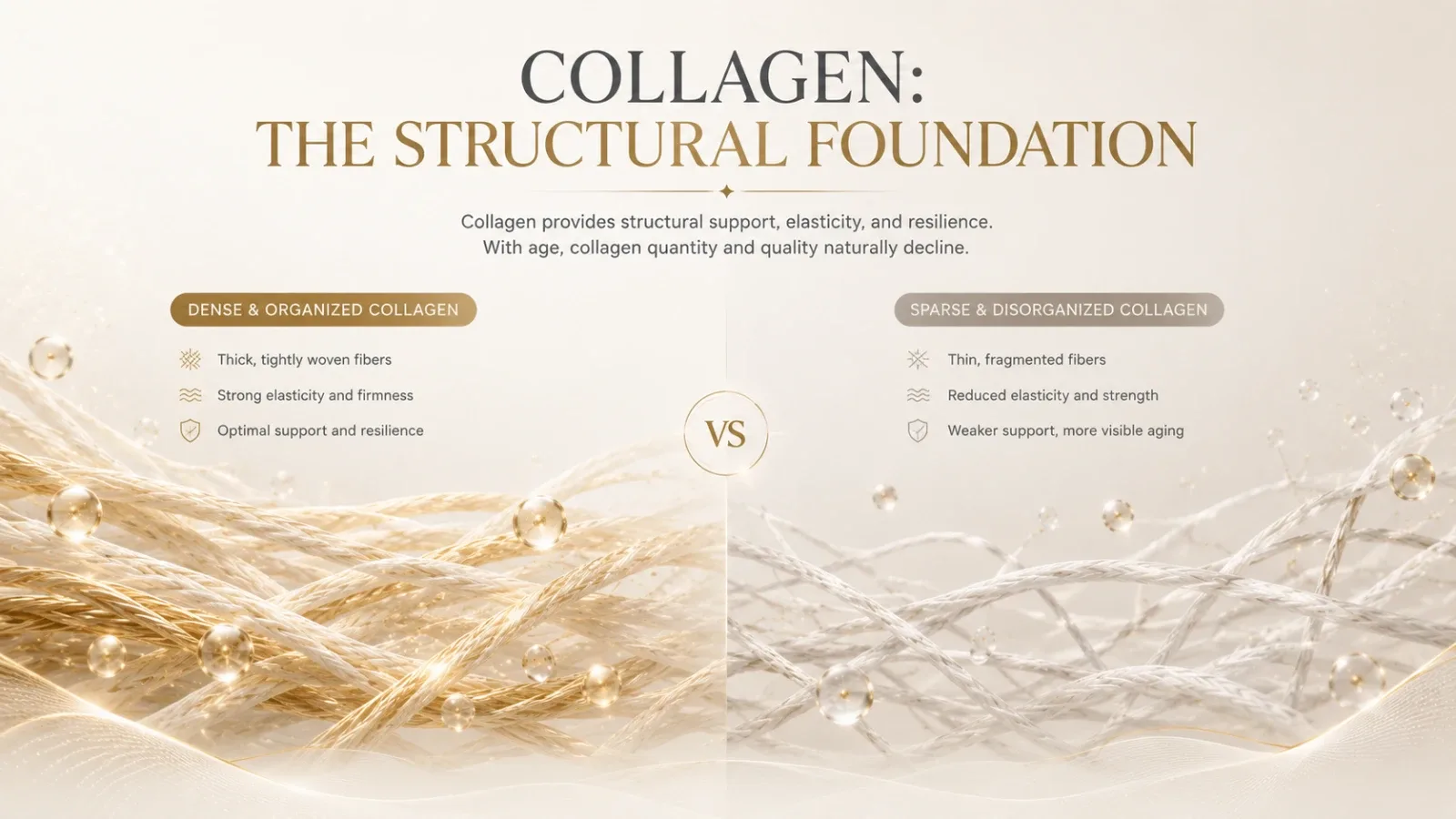
Collagen is a key component of the extracellular matrix and plays an important role in maintaining the skin’s structure, resilience, and support.

As we age, the balance between collagen production and degradation changes. The amount, organization, and structure of collagen fibers may also gradually alter.

Visibly, these changes can contribute to reduced elasticity, the appearance of fine lines, and a gradual loss of structural support.

This is why modern aesthetic medicine is looking beyond the question of “how much volume should be added?” and considering a more fundamental one:

Can biostimulation support the tissue’s own production of new collagen?

This is the core principle behind collagen biostimulation.

How Does Collagen Stimulation Begin?

When a material with biostimulatory properties is introduced into the target tissue, it does more than simply remain in place.

The tissue begins to interact with the material through a series of biological responses. Depending on the type and properties of the material, this process may involve cellular recruitment, material–cell interactions, and subsequent tissue repair and remodeling.

One of the key players in this process is the fibroblast.

Fibroblasts are important cells within connective tissue and are closely involved in the synthesis of collagen and other extracellular matrix components.

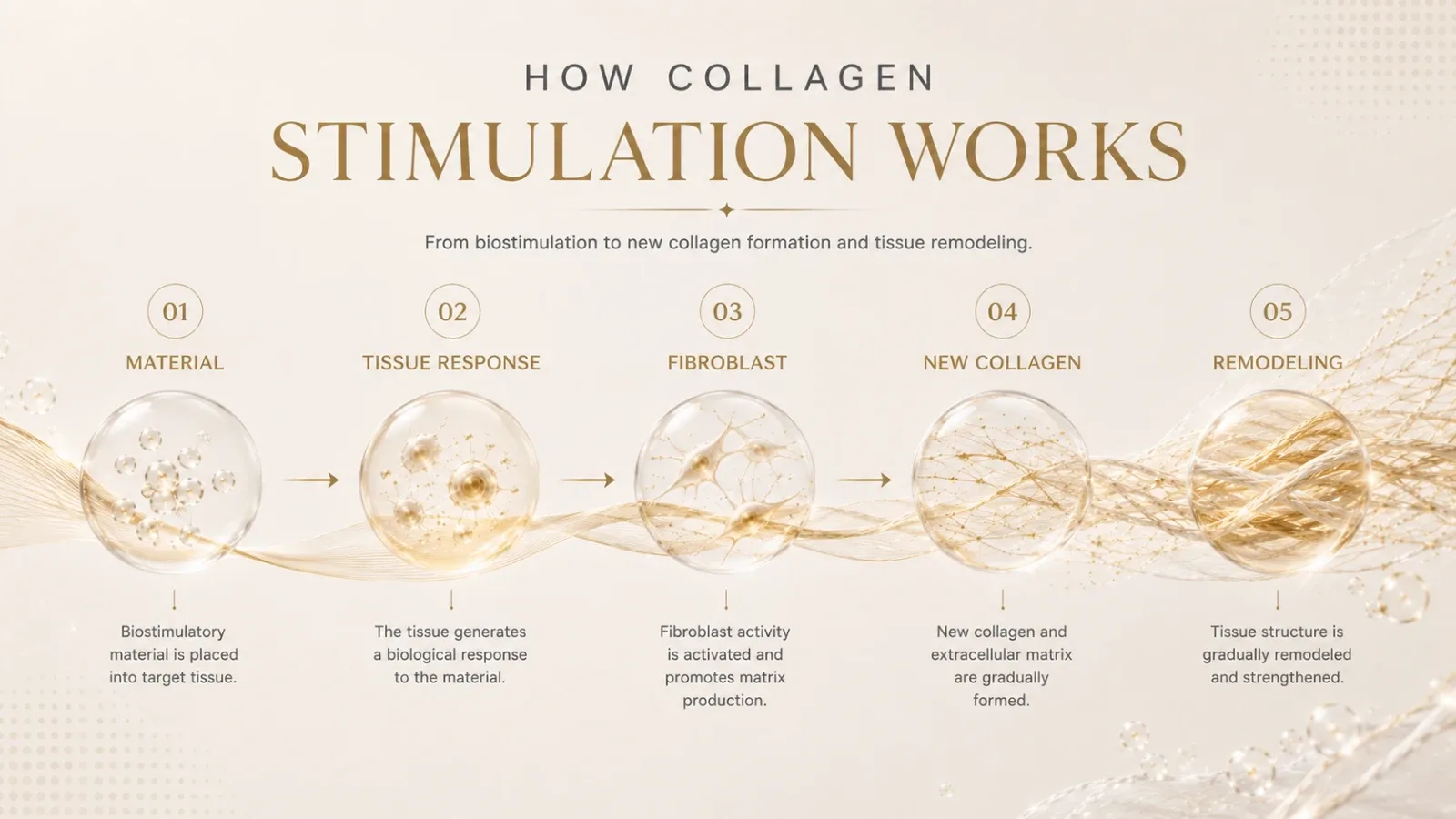
In simplified terms, the process can be understood as:

Biostimulatory Material

Tissue Response

Fibroblast Activity

New Collagen Formation

Tissue Remodeling

This is one of the key reasons collagen stimulation follows a different biological logic from conventional filling.

Collagen Formation Does Not Happen Instantly

There is another essential concept in understanding collagen stimulation:

Time.

New collagen formation and tissue remodeling are gradual biological processes. They do not occur immediately after a material is introduced into the tissue.

As cellular activity and extracellular matrix remodeling progress, newly formed collagen can contribute to the gradual reorganization of tissue structure.

Compared with approaches focused primarily on immediate volume change, collagen stimulation therefore places greater emphasis on progressive change and tissue remodeling over time.

This also means that collagen biostimulators should not be evaluated solely by what happens immediately after treatment. It is equally important to understand how the tissue continues to change over the following period.

Different Biostimulatory Materials Work Differently

“Collagen biostimulator” does not refer to a single material.

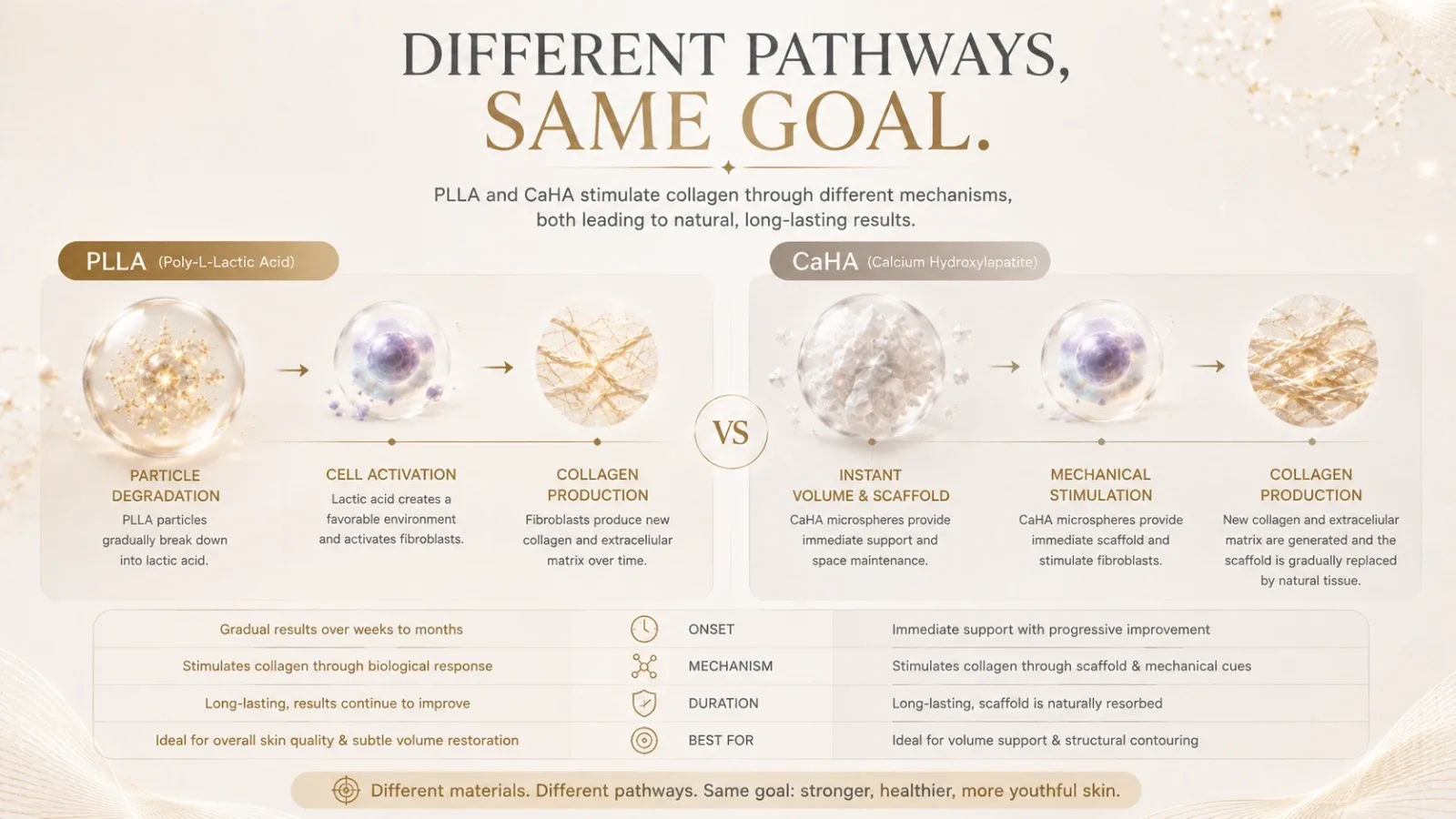
Materials commonly discussed in aesthetic medicine include PLLA (Poly-L-Lactic Acid) and CaHA (Calcium Hydroxylapatite).

Although both may be associated with collagen stimulation, their material properties, tissue interactions, degradation processes, and clinical applications are not identical.

PLLA, for example, is generally associated with biostimulatory activity that supports gradual collagen formation. CaHA combines its structural material properties with biostimulatory effects.

For this reason, collagen stimulation should not be understood as one universal mechanism shared identically by every material.

Different materials require different ways of understanding their mechanisms and applications.

From “What Does the Material Provide?” to “How Does the Tissue Respond?”

Once we understand collagen stimulation, we begin to see a different way of thinking about aesthetic materials.

Conventional filling is often considered from the perspective of the material itself:

How much volume can it provide? What kind of contour can it create?

Collagen stimulation introduces another important question:

How will the tissue respond to the material?

This makes the relationship between material science, tissue biology, and aesthetic objectives increasingly important.

And this is one of the areas that makes regenerative aesthetics worth continued exploration. What matters is not simply a particular ingredient, but understanding what happens after a material enters the tissue—and how those biological changes may ultimately translate into tissue-level and aesthetic outcomes.

For Soul Youth, understanding the mechanisms behind collagen stimulation is also an important foundation for exploring regenerative materials and advanced aesthetic solutions.

Regeneration begins with understanding biology.

Specifications, terms and registration status.

Our team supports licensed clinics, distributors and OEM partners — tell us what your market needs.

Make an Enquiry

Essential cookies keep the site working. With your consent we also use analytics to improve it.