30 July 2026
PLLA vs HA Filler: Why the Future of Facial Rejuvenation Is Moving Toward Collagen Regeneration
For decades, aesthetic medicine focused mainly on replacing lost volume through traditional fillers. However, facial rejuvenation is gradually shifting from simply adding volume toward restoring the biological quality of aging tissues.
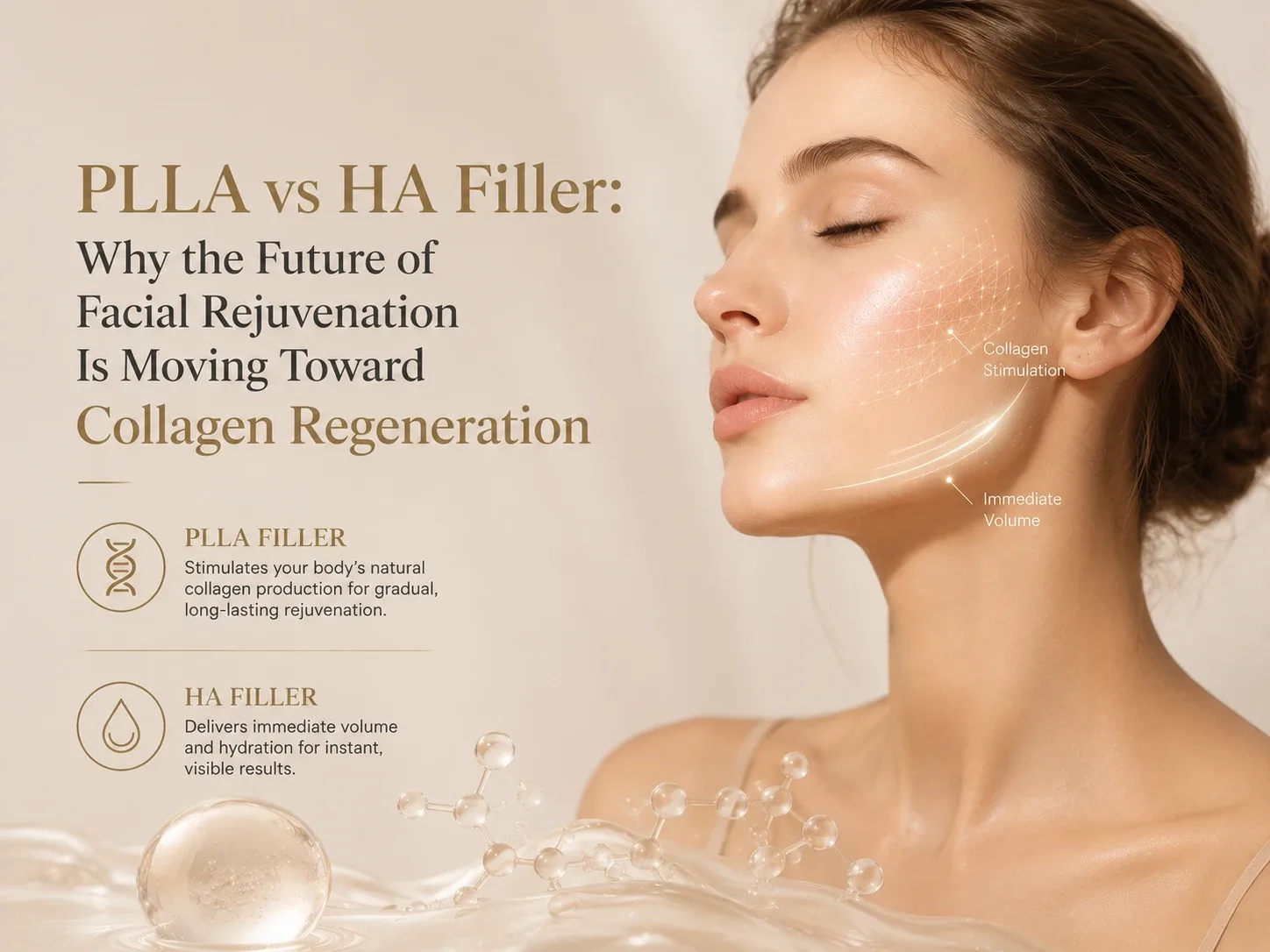
PLLA is a collagen biostimulator: rather than adding volume directly, it is studied for a gradual, fibroblast-mediated collagen response over weeks to months. HA fillers add volume immediately. Clinics increasingly use the two for different indications rather than as substitutes.
This is where collagen biostimulators such as Poly-L-Lactic Acid (PLLA) have gained increasing attention.
Unlike traditional hyaluronic acid (HA) fillers that primarily provide structural volume, PLLA works through a regenerative approach by stimulating the body's own collagen production over time.
HA and PLLA: Different Roles, Different Treatment Goals
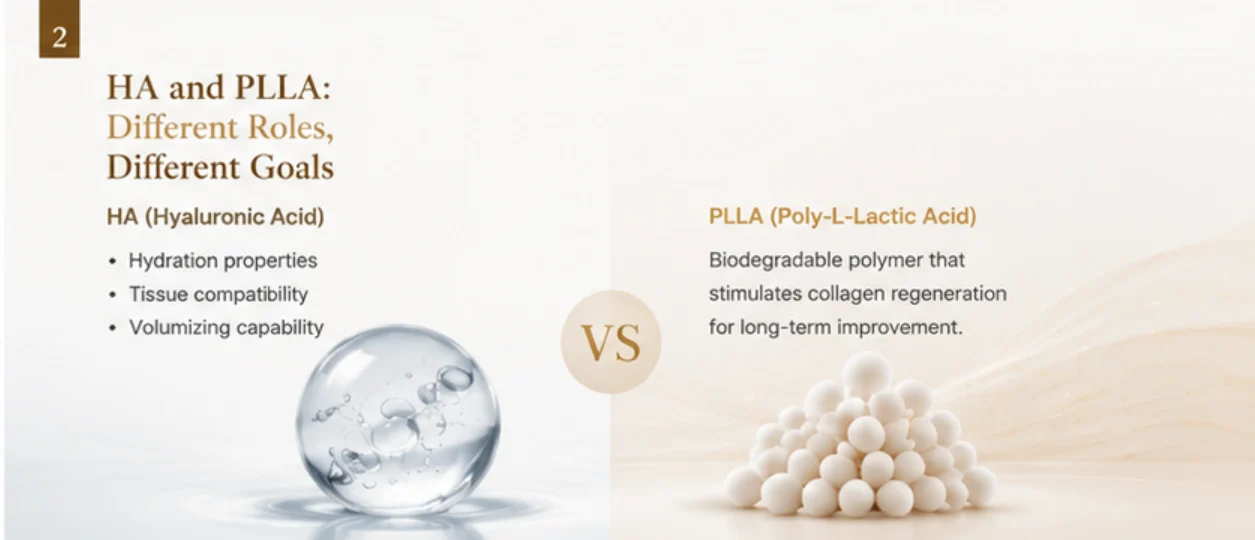
HA fillers and PLLA products are sometimes compared, but they serve different purposes.
Hyaluronic Acid (HA)
HA is naturally found in human tissues and is widely used in aesthetic medicine because of:
Hydration properties
Tissue compatibility
Volumizing capability
PLLA
PLLA is a biodegradable polymer designed to support collagen regeneration.
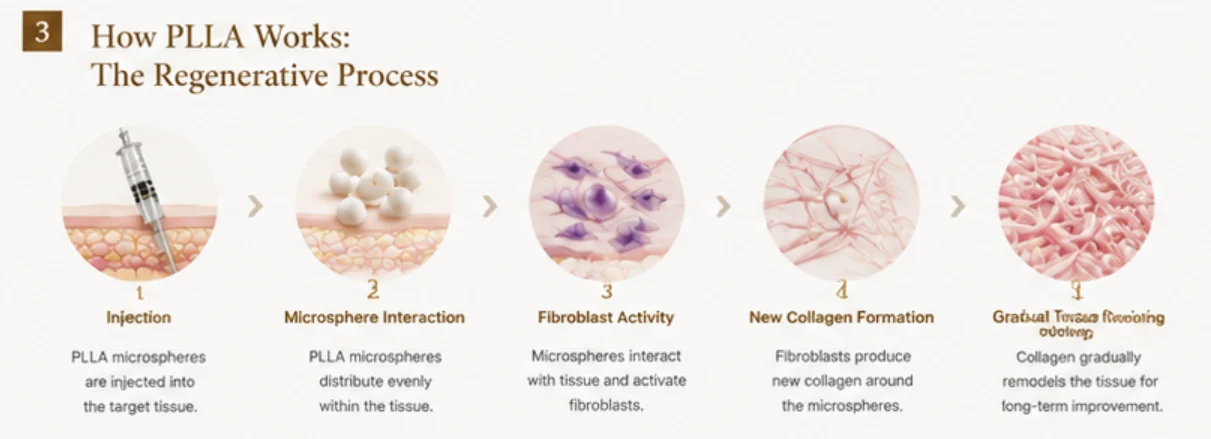
Its mechanism involves:
Injection
↓
PLLA microsphere interaction with tissue
↓
Fibroblast activity
↓
New collagen formation
↓
Gradual tissue remodeling
Why Collagen Stimulation Is Becoming a Major Trend
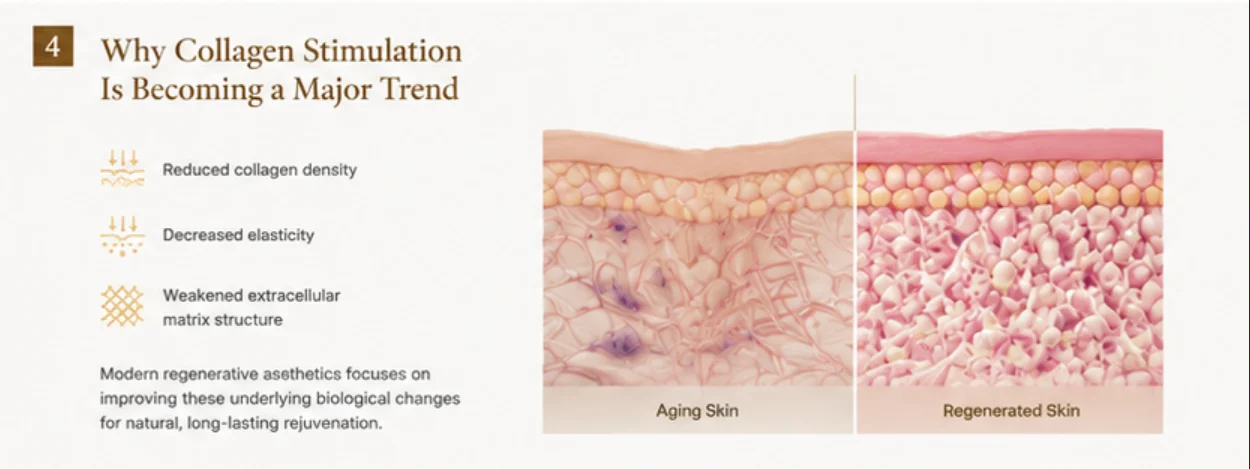
Aging is not only about volume loss.
It also involves:
Reduced collagen density
Decreased elasticity
Weakened extracellular matrix structure
Modern regenerative aesthetics focuses on improving these underlying biological changes rather than creating an artificial appearance.
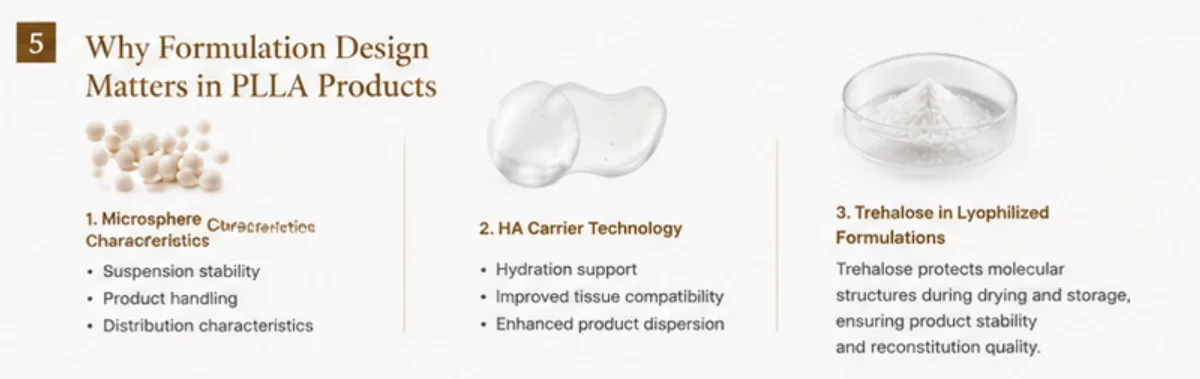
Why Microsphere Engineering Matters in PLLA Products
Not all PLLA products perform the same. Beyond the polymer itself, microsphere engineering plays a decisive role in product performance, collagen stimulation and the longevity of clinical outcomes.
The quality of PLLA microspheres influences not only how the product is injected, but also how it distributes within tissue, interacts with fibroblasts and supports progressive collagen remodeling over time.
1. Microsphere Characteristics
Uniform Microspheres for More Predictable Distribution
REVIVE is manufactured using a highly controlled microsphere production process to achieve a narrow particle-size distribution and smooth spherical morphology.
This formulation strategy is designed to support:
More homogeneous suspension after reconstitution
Improved injectability and handling
More even tissue distribution
Reduced particle aggregation
Consistent collagen stimulation throughout the treated area
Rather than concentrating in isolated clusters, uniformly dispersed microspheres provide a broader regenerative scaffold for fibroblast activation, helping create more natural-looking and progressive tissue remodeling.
Sustained Collagen Regeneration Supports Long-Term Results
Unlike conventional fillers that rely primarily on immediate volume replacement, PLLA gradually stimulates the body's own collagen production.
When microsphere quality, degradation profile and tissue distribution are well controlled, newly formed collagen can continue to provide structural support long after the injected material begins to biodegrade.
For this reason, microsphere engineering is considered one of the key factors influencing the durability of PLLA-based regenerative treatments.
Clinical Observation of Soul Youth REVIVE
In an internal clinical observation of Soul Youth REVIVE, subjects completed a standard treatment protocol consisting of three treatment sessions over approximately three months.
During the 12-month follow-up, the overall correction rate remained above 90%, demonstrating sustained clinical improvement after completion of the treatment course.
These observations suggest that REVIVE supports gradual collagen remodeling capable of maintaining aesthetic correction well beyond the active treatment period.
The above findings are based on internal clinical observation of Soul Youth REVIVE. Product-specific clinical evidence should be interpreted within the study design and patient population.
2. HA Carrier Technology
Combining PLLA with HA aims to provide:
Hydration support
Improved tissue compatibility
Enhanced product dispersion
3. Trehalose in Lyophilized Formulations
Trehalose is widely studied as a stabilizing excipient in freeze-dried pharmaceutical formulations because of its ability to protect molecular structures during drying and storage.
The Future: Combination Regeneration
The next generation of aesthetic medicine is unlikely to be about choosing “filler” or “biostimulator”. Instead, the future may focus on:
Volume restoration
Collagen stimulation
Skin quality improvement
working together.
Soul Youth REVIVE represents this regenerative approach by combining PLLA technology with HA-based formulation design.

References
Specifications, terms and registration status.
Our team supports licensed clinics, distributors and OEM partners — tell us what your market needs.