11 November 2026
Vascular Occlusion in Dermal Fillers: Warning Signs Every Practitioner Should Know
Dermal fillers have become an established part of modern aesthetic medicine, offering approaches to volume restoration, facial contouring, and collagen biostimulation. However, even with appropriate product selection and injection techniques, vascular complications remain an important clinical safety consideration.
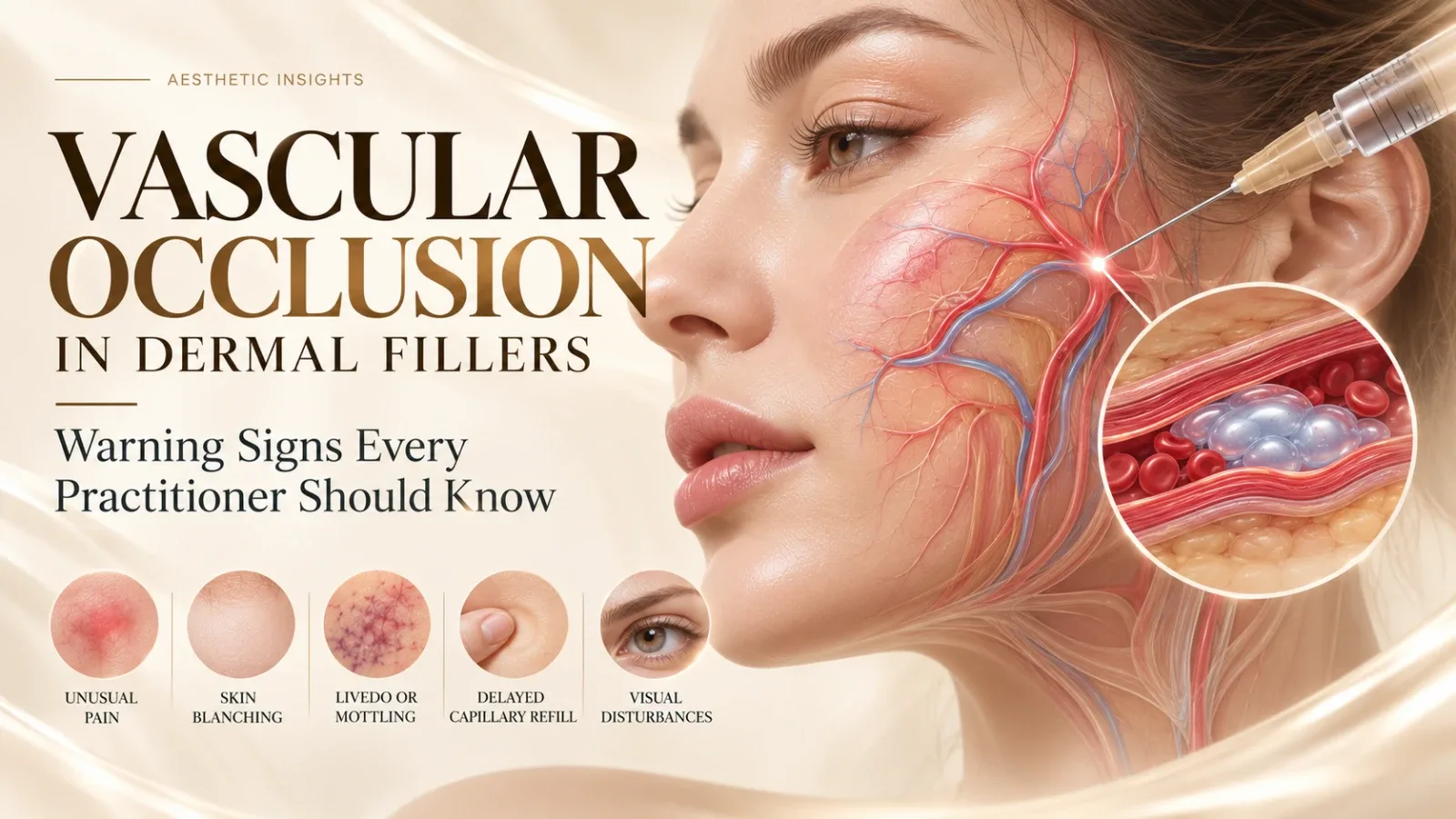
Vascular occlusion (VO) is relatively uncommon, but its consequences can be severe. Depending on the affected vascular territory, impaired circulation may lead to tissue ischemia, skin necrosis, or, in rare cases, irreversible visual impairment.
Understanding the warning signs—and knowing how to respond—is therefore an essential component of responsible injectable practice.
01 | How Does Vascular Occlusion Occur?
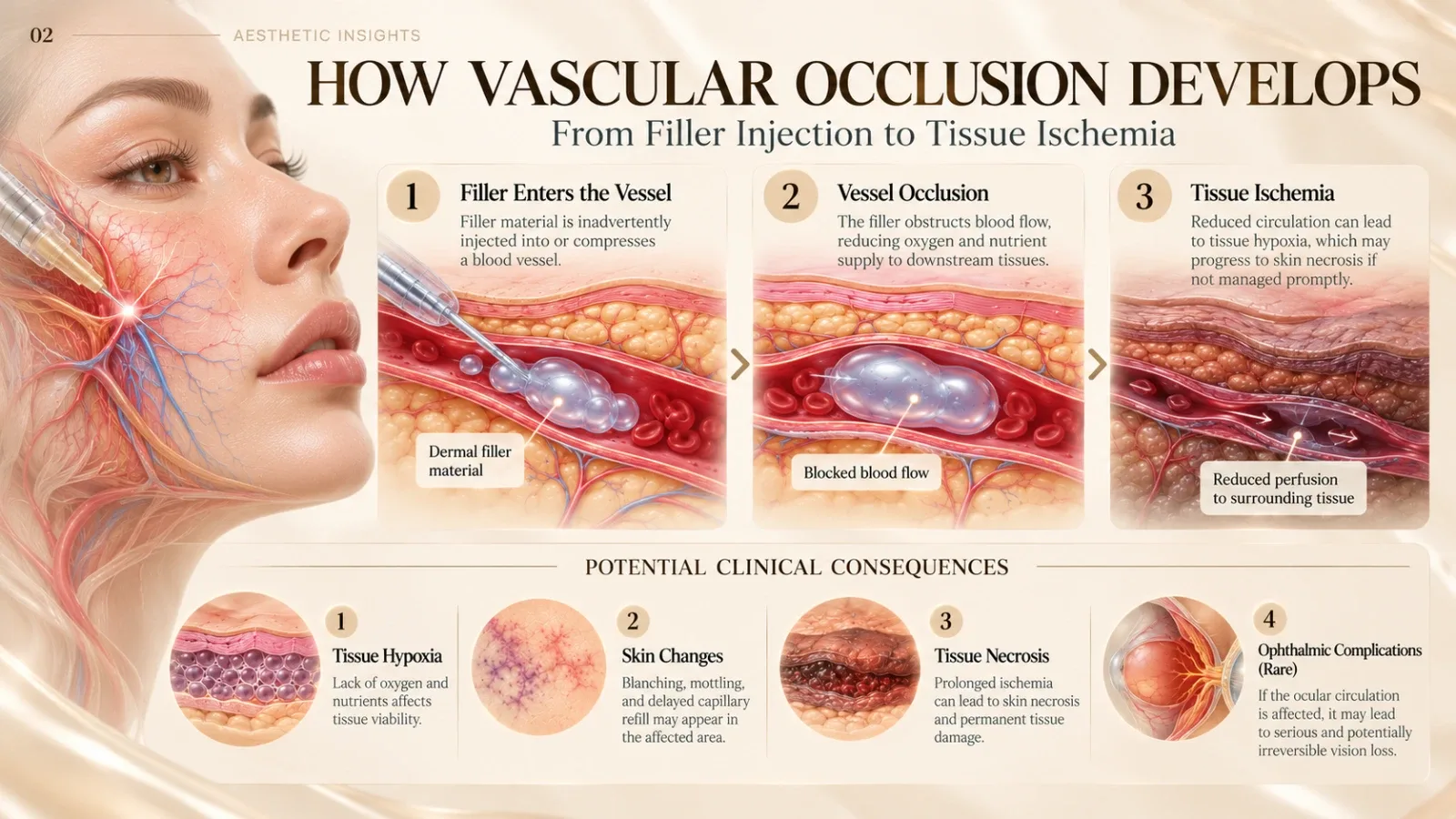
Vascular occlusion most commonly occurs when injectable filler material inadvertently enters a blood vessel, obstructing normal circulation.
The resulting reduction in blood flow deprives downstream tissues of oxygen and nutrients, potentially initiating an ischemic injury.
External compression of vessels by injected material may also contribute to vascular compromise in certain circumstances.
The clinical consequences depend on several factors, including the anatomical location, affected vessel, extent of obstruction, filler characteristics, and time to intervention.
Facial vascular anatomy adds another layer of complexity. Arterial connections between facial and ophthalmic circulation mean that intravascular filler injection can, in rare circumstances, result in embolic events affecting the eye.
This is why understanding vascular anatomy and its anatomical variations is fundamental to injection safety.
02 | Five Warning Signs That Require Immediate Attention
1. Unusual or Escalating Pain
Severe, unexpected, or increasing pain during or after injection may indicate tissue ischemia. However, the absence of pain does not exclude vascular occlusion, particularly when local anesthetics are involved.
2. Skin Blanching
Sudden whitening or marked paleness may result from reduced arterial perfusion. Persistent blanching should prompt immediate evaluation.
3. Livedo or Mottled Discoloration
A patchy, dusky, or net-like skin pattern can indicate impaired circulation. Such changes may become more apparent as tissue ischemia progresses.
4. Delayed Capillary Refill
Capillary refill assessment provides useful information about tissue perfusion. Delayed color return following pressure release, especially compared with surrounding unaffected tissue, is an important warning sign.
5. Visual or Neurological Symptoms
Sudden blurred vision, visual field loss, eye pain, severe headache, or stroke-like neurological symptoms following filler injection require emergency assessment.
Importantly, vascular occlusion may be recognized during the procedure or become apparent hours later.
No single symptom should be used in isolation to confirm or exclude the diagnosis.
03 | Why Early Recognition Matters
When blood supply is compromised, tissue injury can progress over time.
Early recognition creates an opportunity for intervention before ischemic damage becomes more extensive.
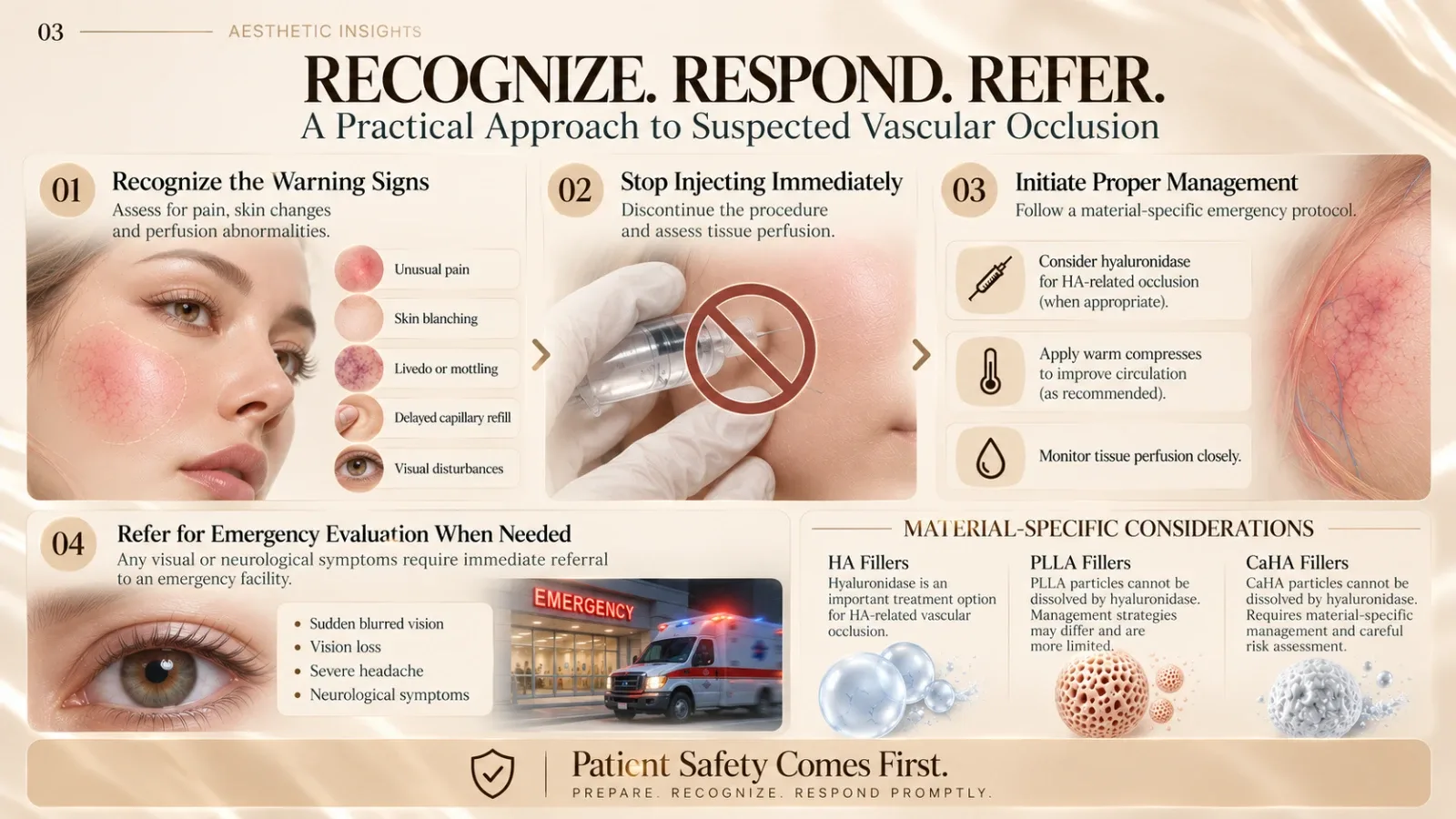
The Complications in Medical Aesthetics Collaborative (CMAC) guideline emphasizes immediate cessation of injection, assessment of the affected vascular territory, and prompt implementation of an appropriate management protocol when vascular occlusion is suspected.
For suspected cutaneous vascular occlusion, assessment should include skin color, capillary refill, pain, anatomical distribution, and relevant treatment history.
For suspected ophthalmic or neurological involvement, immediate emergency referral is essential.
Recent multidisciplinary guidance emphasizes that attempts at initial treatment should not delay hospital transfer when visual loss or cerebrovascular involvement is suspected.
The distinction is critical: managing threatened skin and managing suspected retinal or cerebral ischemia are not interchangeable clinical pathways.
04 | Why Material Type Changes Emergency Management
Injectable aesthetic products differ in their chemical composition, physical properties, and tissue interactions.
These differences are particularly important when managing vascular complications.
Hyaluronic Acid (HA)
For HA filler-induced cutaneous vascular occlusion, hyaluronidase is an important treatment because it can degrade hyaluronic acid.
Professional guidelines describe prompt, appropriately administered hyaluronidase treatment as a key component of management.
However, management must follow current clinical protocols, and successful treatment of cutaneous ischemia does not establish that retinal embolization can be reversed.
Poly-L-Lactic Acid (PLLA) and Calcium Hydroxylapatite (CaHA)(链接:https://soul-youth.com/products/soul-youth-lift)
PLLA and CaHA are different biomaterials, with mechanisms that include collagen biostimulation and tissue remodeling.
Unlike HA, their particles cannot be directly dissolved by hyaluronidase.
Therefore, practitioners must understand the properties of the specific material being injected and have appropriate complication-management and emergency-referral procedures in place.

For non-HA vascular complications, treatment options are more limited and the evidence base remains less established.
Material selection should never be separated from an understanding of material-specific risks.
05 | Building a Comprehensive Injection Safety Strategy
Managing vascular complications begins before the injection takes place.
A responsible clinical approach should integrate several considerations:
Anatomical knowledge: Understanding facial vascular pathways, depth, and anatomical variation.
Patient assessment: Reviewing previous procedures, surgical history, relevant medical conditions, and anatomical factors.
Appropriate technique: Using carefully planned injection approaches while recognizing that no technique or device completely eliminates vascular risk.
Early recognition: Monitoring for unexpected pain, skin color changes, altered perfusion, and visual symptoms.
Emergency preparedness: Maintaining material-appropriate protocols, trained personnel, necessary emergency resources, and established referral pathways.
For professionals working with collagen-stimulating biomaterials, these principles are especially important because different injectable materials cannot necessarily be managed using the same emergency treatments.
At Soul Youth, our regenerative aesthetics portfolio includes REVIVE (PLLA + HA + Trehalose) and LIFT (CaHA + HA), representing different biomaterial formulation approaches.
As regenerative biomaterials continue to evolve, understanding their biological behavior must go hand in hand with responsible application, professional education, and patient safety awareness.
Conclusion
Vascular occlusion is an uncommon but potentially devastating complication of aesthetic injections.
Its management requires more than technical injection skills. Practitioners must recognize early signs of tissue ischemia, understand material-specific treatment limitations, and respond rapidly when complications are suspected.
Above all, suspected visual or neurological complications require immediate emergency evaluation.
The foundation of safer injectable practice is not confidence that complications will never occur, but the knowledge and preparedness to recognize and respond when they do.
References
1.Murray G, et al. Guideline for the Management of Hyaluronic Acid Filler-induced Vascular Occlusion. Journal of Clinical and Aesthetic Dermatology.
2.Lowe S. Hyaluronic Acid Dermal Filler-Associated Vascular Occlusion—A Review of Prevention and Management Strategies. Journal of Cosmetic Dermatology.
3.Guide for Managing Vascular Occlusion Caused by Fillers with Exclusive Cutaneous Involvement: A Review of Diagnosis, Classification, and Treatment. Aesthetic Plastic Surgery.
4.Consensus Guidelines for the Management of Tissue Filler-Induced Vision Loss in the United Kingdom. Aesthetic Surgery Journal.
5.American Academy of Ophthalmology. Intravascular Injection of Soft-Tissue Fillers Can Have Severe Visual Consequences.
Specifications, terms and registration status.
Our team supports licensed clinics, distributors and OEM partners — tell us what your market needs.